Choosing the right gate for your property is an important decision that affects security, convenience, curb appeal, and long-term maintenance costs. Whether you own a residential home, commercial property, or private estate, selecting between an automatic gate and a manual gate can significantly impact your daily experience.
Many property owners researching automatic gate installation options often compare them with traditional manual gates before making a final decision. While both solutions offer benefits, understanding the differences can help you choose the option that best fits your needs, budget, and lifestyle.
In this guide, we’ll compare automatic and manual gates based on cost, security, convenience, maintenance, and overall value.
Understanding Automatic Gates
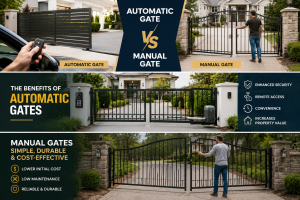
Automatic gates operate using motors, sensors, and access control systems that allow users to open and close the gate without manual effort. Professional electric gate installation services can integrate remote controls, keypads, smartphone access, and intercom systems for enhanced convenience.
Modern homeowners often choose automatic driveway gates because they provide easy access while adding a layer of security to the property. These systems can be customized to fit different property layouts and architectural styles.
One of the main reasons people invest in automatic gate installation is the convenience of controlling entry and exit without leaving their vehicle. This feature becomes especially valuable during bad weather or when managing high traffic at a property.
Understanding Manual Gates
Unlike automated systems, manual driveway gates require physical operation to open and close. These gates are typically simpler in design and involve fewer mechanical components.
Many homeowners prefer manual driveway gates when they want a cost-effective solution with minimal maintenance requirements. Since manual gates do not depend on electrical components, they are generally less susceptible to technical failures.
While they may lack the advanced features of automated systems, manual gates can still provide excellent security and visual appeal when properly installed.
Comparing Security Features
Security is often the primary concern for property owners evaluating gate options.
Residential security can be significantly enhanced through residential automatic gates, which often include access control systems, cameras, and smart monitoring features. These technologies help restrict unauthorized access and improve overall property protection.
Manual gates can also provide security, but they rely on users consistently locking and securing them. This may be less practical for households with frequent visitors or multiple vehicles entering and exiting throughout the day.
For homeowners prioritizing controlled access and convenience, residential automatic gates often offer a more comprehensive security solution.
Convenience and Daily Use
Convenience is one of the biggest differences between automatic and manual gate systems.
With an automatic gate opener, users can operate their gate using a remote control, keypad, smartphone app, or sensor. This eliminates the need to exit the vehicle every time the gate is used.
An automatic gate opener can be particularly beneficial for families, elderly homeowners, and individuals with mobility limitations.
Manual gates require physical effort and can become inconvenient during heavy rain, extreme temperatures, or busy daily routines. For some property owners, the convenience offered by automation justifies the additional investment.
Cost Considerations
Budget is often a deciding factor when choosing between automatic and manual gates.
The overall automatic gate cost is generally higher due to motors, electrical components, installation requirements, and access control systems. Property owners should evaluate both upfront expenses and long-term operational costs when considering automation.
Factors such as gate size, materials, and system complexity can influence the final automatic gate cost.
On the other hand, the driveway gate cost for a manual gate is typically lower because it requires fewer components and less specialized installation work.
Homeowners comparing options should also understand that the total driveway gate cost may vary depending on materials, design, and site preparation requirements.
Electric Gate Expenses
When evaluating automated systems, many homeowners research electric gate cost before making a purchase decision.
The total electric gate cost can depend on motor quality, safety features, automation technology, and customization options. While the initial investment may be higher, many property owners find the convenience and security benefits worthwhile over time.
Professional electric gate installation ensures that all electrical components operate safely and efficiently while complying with local regulations.
Maintenance Requirements
Maintenance is another important consideration when comparing gate systems.
Automatic gates require routine inspections of motors, sensors, hinges, and control systems. Property owners should schedule regular servicing to ensure optimal performance and prevent unexpected issues.
Manual gates generally have fewer moving parts, making maintenance simpler and less expensive. However, hinges, latches, and structural components should still be inspected periodically.
The level of maintenance you are comfortable with can influence which type of gate is best for your property.
Aesthetic Appeal and Design Options
Both automatic and manual gates can enhance a property’s appearance.
Homeowners exploring driveway gate ideas often discover a wide range of materials, styles, and customization options available for both systems. From modern minimalist designs to traditional decorative entrances, gates can complement nearly any architectural style.
Popular driveway gate ideas include ornamental iron gates, wood privacy gates, contemporary aluminum designs, and custom-built entry systems.
The visual impact of a professionally installed gate can significantly improve curb appeal and increase perceived property value.
Choosing the Right Gate Material
Material selection plays a major role in durability and appearance.
Many homeowners choose metal driveway gates because they offer strength, longevity, and resistance to wear. Steel, aluminum, and wrought iron are among the most common options available.
Professionally installed metal driveway gates can be customized with decorative elements while maintaining high levels of security and durability.
Other materials such as wood and composite products may appeal to homeowners seeking a more natural or traditional appearance.
Residential Installation Considerations
Proper planning is essential for successful residential gate installation projects.
Before starting a residential gate installation, homeowners should evaluate available space, traffic patterns, property layout, and local regulations. These factors help determine the most suitable gate style and operating system.
Working with experienced professionals ensures that the gate functions properly while meeting safety and performance standards.
Swing Gate vs Sliding Gate
Many property owners researching automated systems eventually face the question of swing gate vs sliding gate.
The swing gate vs sliding gate decision largely depends on available space and property layout. Swing gates require sufficient clearance to open inward or outward, while sliding gates move horizontally along a track.
Properties with limited driveway space often benefit from sliding gate systems, whereas larger properties may accommodate either option comfortably.
Which Is the Best Driveway Gate?
There is no universal answer when determining the best driveway gate because every property has unique requirements.
For homeowners seeking convenience, advanced security, and modern technology, an automated system may be the best driveway gate solution. Those prioritizing simplicity and lower upfront costs may find a manual gate more suitable.
The ideal choice depends on your budget, lifestyle, security goals, and maintenance preferences.
Installation Process Overview
Regardless of the system you choose, professional driveway gate installation is essential for long-term performance.
A typical driveway gate installation includes site evaluation, foundation preparation, gate assembly, hardware installation, and final testing. Proper installation helps prevent operational issues and extends the lifespan of the gate.
Experienced contractors can also recommend the most suitable gate design based on your property’s specific needs.
Final Verdict
If you’re unsure whether an automatic or manual gate is right for your property, the experts at Manbeck Fence Company can help you evaluate your options and recommend a solution tailored to your needs.
Conclusion
From automatic gate installation to custom manual gate solutions, Manbeck Fence Company is committed to delivering quality craftsmanship and dependable service. Contact our team today to discuss the best gate option for your home or business.